NOVEMBER 2024
THE UPPER NAM NGO A SECRET VALLEY IN HIN NAMNO NP
Forty-five mammal species have been provisionally

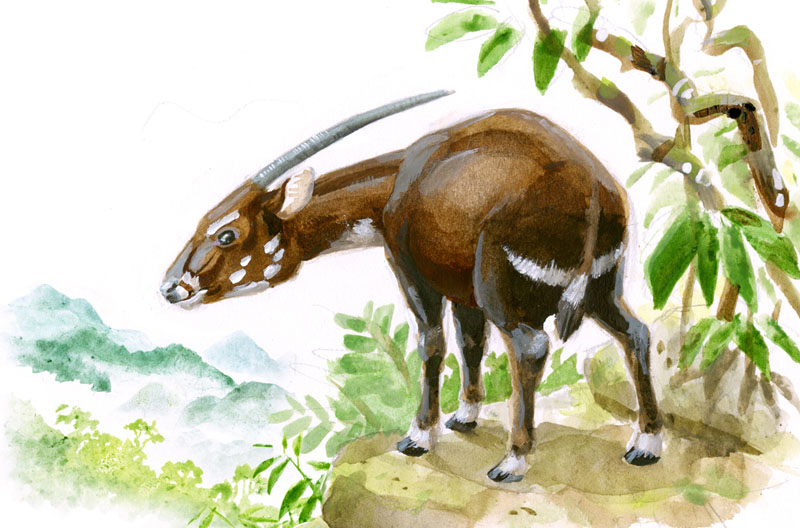
- Banner: saola by Eric Losh.
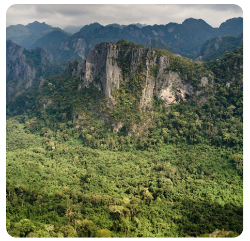
- Photo #1: bird's eye over Hin Namno National Park.
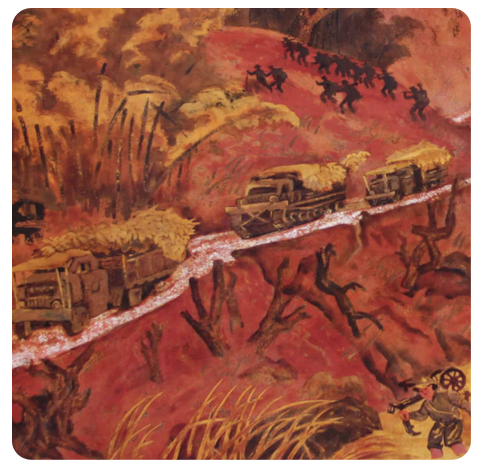
- Illustration #1: Hô Chi Minh Trail. By Hoang Tich Chu. 1974.
- Illustration #2: the clouded tiger.
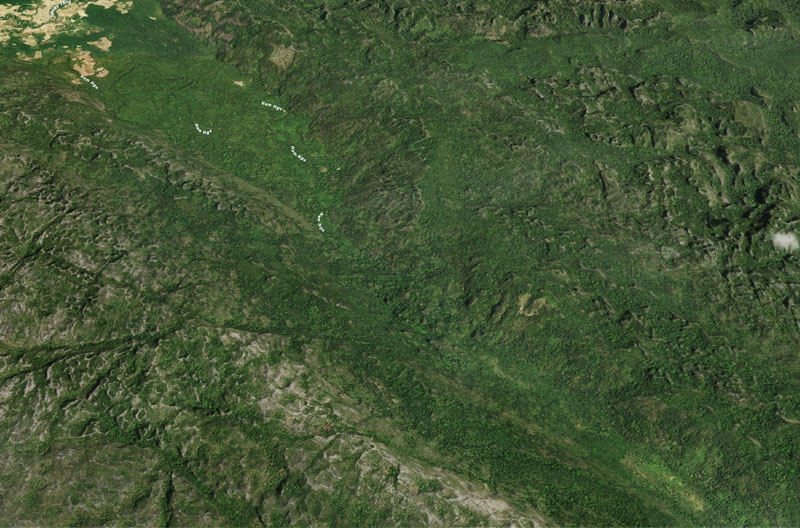
Satellite map of the Upper Nam Ngo Valley and its heights
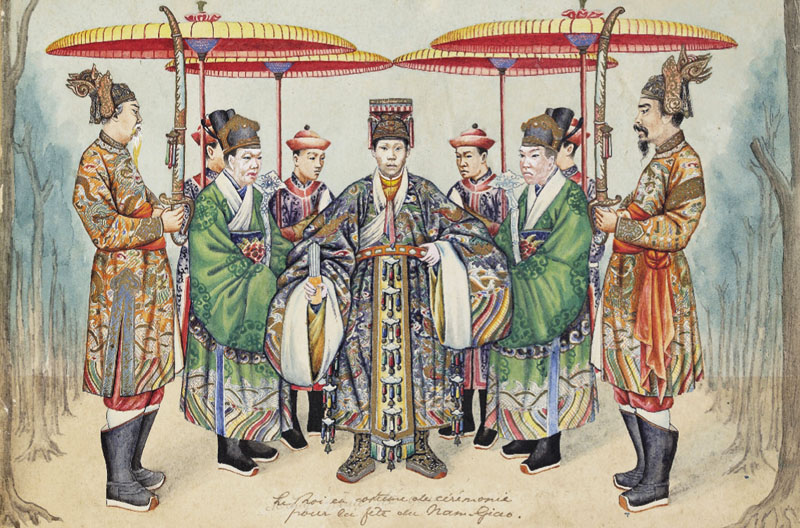
SHOGUN LORDSHIP AND THE ROYAL NGUYÊN DYNASTY
As part of our expanding urban production, we share the story of the family of Dong Khanh (born Nguyen Phúc Ung Ky or Nguyen Phúc Ung Duong), the 9th ruler of the Nguyên dynasty. He had nine descendants, including Princess Ngoc Son, whose garden house on the edge of the imperial city of Hue is one of the last standing witnesses to Vietnam’s dynastic history.
Before delving into the family of Dong Khanh, we look briefly at the Nguyên family clan’s past, which can be divided into two distinct periods: the shogunate lords who governed the southern part of Vietnam, known as Cochinchina, from 1558–1802; and the royal Nguyên dynasty, which ruled all of Vietnam from 1802–1945.
The first period is associated with territorial expansion towards the south, the famous “march south,” which took place gradually and relatively peacefully thanks to the spread of dôn dien. These military colonies were created to support progressive territorial appropriation and defense against bellicose neighbors; in conjunction with the transformation of assimilated land, they were generally reformed into rice paddies. This southward push, similar to the German Drang Nach Osten (eastward push) from the 12th to 14th centuries, consolidated the dominance of the Nguyên lords, who achieved remarkable success in agriculture, crafts, and foreign trade.
However, these achievements were not without internal unrest between palace members and political rivals, including the Trinh in the north and the Tây Son, who led a peasant revolt in 1771 and subsequently founded a new dynasty in 1788. This dazzling triumph was short-lived; following the death of its founder Nguyên Huê (alias Quang Trung), his heir lost the throne to Nguyên Anh (alias Gia Long), who was crowned in 1802 and created the royal Nguyên dynasty.
This second period is further divided into the first national independence (1802–1883) and the French protectorate (1883–1945). During the national independence phase, four emperors ruled: Gia Long (1802–1820), Minh Mang (1820–1841), Thieu Tri (1841–1847), and Tu Duc (1847–1883). This period saw reunification, stability, and a rise in power. At the same time, it was marked by absolutism, immobility, a lack of openness to the West (and to Christianity, which was considered perverse), and a refusal to modernize the country (science and technology were viewed as ingredients of barbarism). Some observers believe these views were pretexts for the French invasion in 1883.
The empire’s closed-door policy, coupled with its persecution of Catholics, finally led Tu Duc to capitulate to the French offensive, ushering in the second phase of the French protectorate. This period saw nine kings: Duc Duc (1883, reigned for three days), Hiep Hoa (1883, assassinated after four months), Kien Phuc (1883–1884), Hàm Nghi (1884–1885), Dong Khanh (1885–1889), Thanh Thai (1889–1907), Duy Tan (1907–1916), Khai Dinh (1916-1925), and finally Bao Dai (1925–1945), the last emperor of the Nguyên dynasty. These puppet kings advocated an assertive collaboration with the French occupation.
This brings us to Dong Khanh. He was the older brother of the young emperor Kien Phuc and the eldest son of Prince Nguyen Phúc Hong Cai (or Kien-Thai-Vuong), who was the 26th son of Emperor Thiêu Tri, brother of Tu Duc. With no heir of his own, Tu Duc adopted Dong Khanh and gave him the title of Duke of Kiên Giang. When the French army captured the imperial city, the young emperor Hàm Nghi went into hiding at the Tan So military base in Quang Binh at the instigation of court regents Nguyen Van Tuong and Ton That Thuyet. The regents had attempted to assassinate General Henri Roussel de Courcy, who, together with the French resident de Champeaux, encouraged the dowager empress Nghi Thiên to place Hàm Nghi’s elder half-brother, Prince Nguyen Phúc Ung Ky, on the throne.
Dong Khanh’s reign of three years, four months, and nine days got off to a sluggish start. He had no authority over foreigners or the ruling class of literati who had joined causes with Regent Thuyet. He was later widely supported by the French authorities, who emphasized his loyalty to fulfilling his obligations to them and the sympathy of his commitments to France. A fine intellectual with a keen interest in literature, the affable young emperor treated his brothers and relatives in perfect harmony with the principles of Confucianism and willingly adopted foreign customs in a way that surpassed that of many of his compatriots.
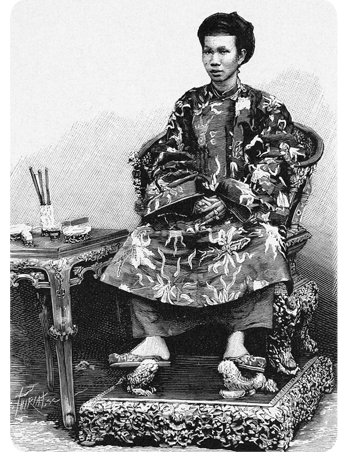
From his 11 concubines, he obtained nine direct descendants: six sons (including Nguyen Phúc Buu Dao, the future emperor Khai Dinh), and three daughters, including Princess Ngoc Son (Nguyen Phuc Di Hy, often erroneously called Hy Hy). Princess Di Hy was Dong Khanh’s second daughter and the only one to reach adulthood. She married Commander-in-Chief Nguyen Huu Tien, military official of Emperor Khai Dinh and son of academician Nguyen Huu Thang, a high-ranking mandarin of the dynasty. Their union produced a daughter, but the princess soon fell ill and died at the age of 20. Following his wife’s wishes, Prince Consort Tien remarried a royal princess, Princess Thi Tran, daughter of Prince Kien Quan Ung Quyen, younger brother of Dong Khanh. This marriage produced seven children. In 1917, Emperor Khai Dinh posthumously honored his younger sister Di Hy, Princess Ngoc Son, with the title of Trang Nha.
In 1921, not far from the confluence of two rivers – the Dong Ba and the Huong, commonly known as the Perfume River – Nguyen Huu Tien built a garden house in memory of his late wife, where he lived with his wife and their seven children. For over 90 years, Nguyen Huu Tien’s descendants have venerated and preserved this historic site. His granddaughter Nguyen Thi Suong is the current owner, and she continues to protect the house with her husband Phan Thuan An, a famous Hue historian. They have passed this spirit on to their three children, who work in the field of preservation and the city’s heritage.
Today, the garden house can be visited in the company of one of Nguyen Thi Suong’s three children. Phan Thuan Thao, who holds a Doctor of Cultural Studies specializing in imperial chamber music, helped make the case for including the Nha Nhac music of the royal court of Hue on UNESCO’s World Intangible Heritage List. Her sister Phan Thuan Y specializes in preserving the architecture of Hue and its surrounding provinces. Here, you’ll learn about the unique features of a garden house based on the principles of Feng Shui, a model of harmony between architecture and nature, as well as the family’s royal history, while discovering a plethora of exceptional artifacts and archives from the Nguyên dynasty and enjoying a tasting of regional specialties.
ILLUSTRATION CREDITS
- Banner: Nguyen Van Nhan's Court of Annam outfit. Nam Giao Manuscript. Hue, Vietnam, 1902.
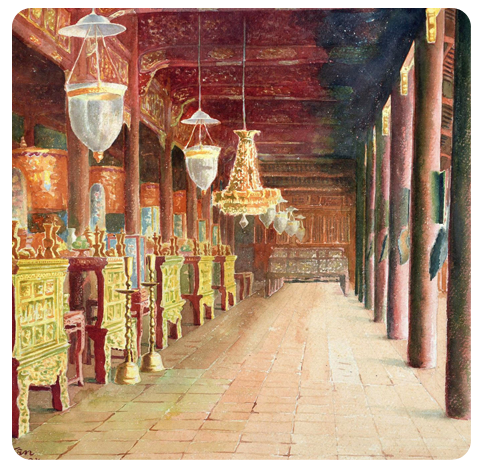
- Illustration #1: Hue Imperial Citadel, by Tran Quang Tran, Indochina School of Fine Arts, class of 1932.
- Illustration #2: the emperor Dong Khanh.

SEE ALSO OUR OTHER NEWSLETTERS